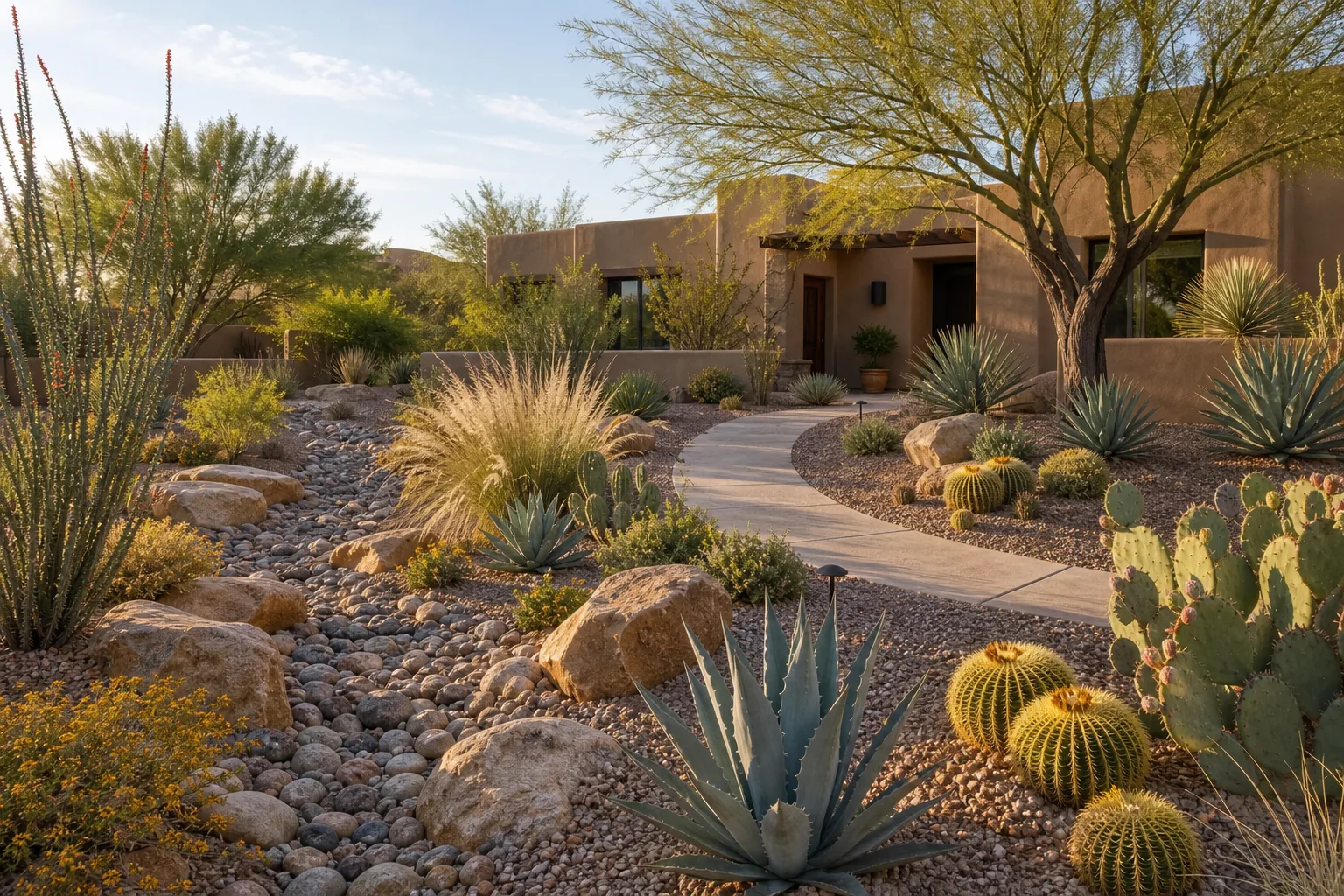
Low-water landscape design
Desert Landscaping & Xeriscaping in Mesa, AZ
Desert beauty, designed to use less water. Gravel, native character, purposeful planting, and efficient drip irrigation.
How the scope takes shape
Desert Landscaping & Xeriscaping starts with the Mesa property.
A strong xeriscape is more than rock. Plant layers, seasonal color, shade, runoff, soil, drip zones, and the view from the street all work together to make a low-water yard feel intentional.
See how we plan this work in our primary Mesa service area, or review all covered cities.
The project may include
- Plant and material direction
- Rock and gravel layouts
- Dry creek and drainage details
- Drip-zone coordination
Water-use perspective
See the potential annual difference.
Compare the lawn area with a lower-water planted zone. The useful decision also considers shade, mature plant size, irrigation design, maintenance, and the current City program rules.
Xeriscaping questions
What homeowners usually ask first.
The site and scope still decide the details, but these answers are a useful place to begin.
Does xeriscaping mean removing every plant?
No. A good low-water plan uses the right plants in deliberate groups, with enough open space for mature growth and clean maintenance.
Can a desert yard still provide shade?
Yes. Desert-adapted shade trees and thoughtful placement can reduce reflected heat while keeping the planting water-conscious.
Continue planning
Related Mesa landscaping services.
These services often connect through grading, water, access, materials, or maintenance.
Ready when the yard is
Get a free online xeriscaping quote.
For a free online quote, use the project form and attach clear, current wide and close-up photos. Explain the outcome you want and include any timing, access, or HOA details that may shape the scope. Call, text, or email if you prefer to discuss the project without photos.